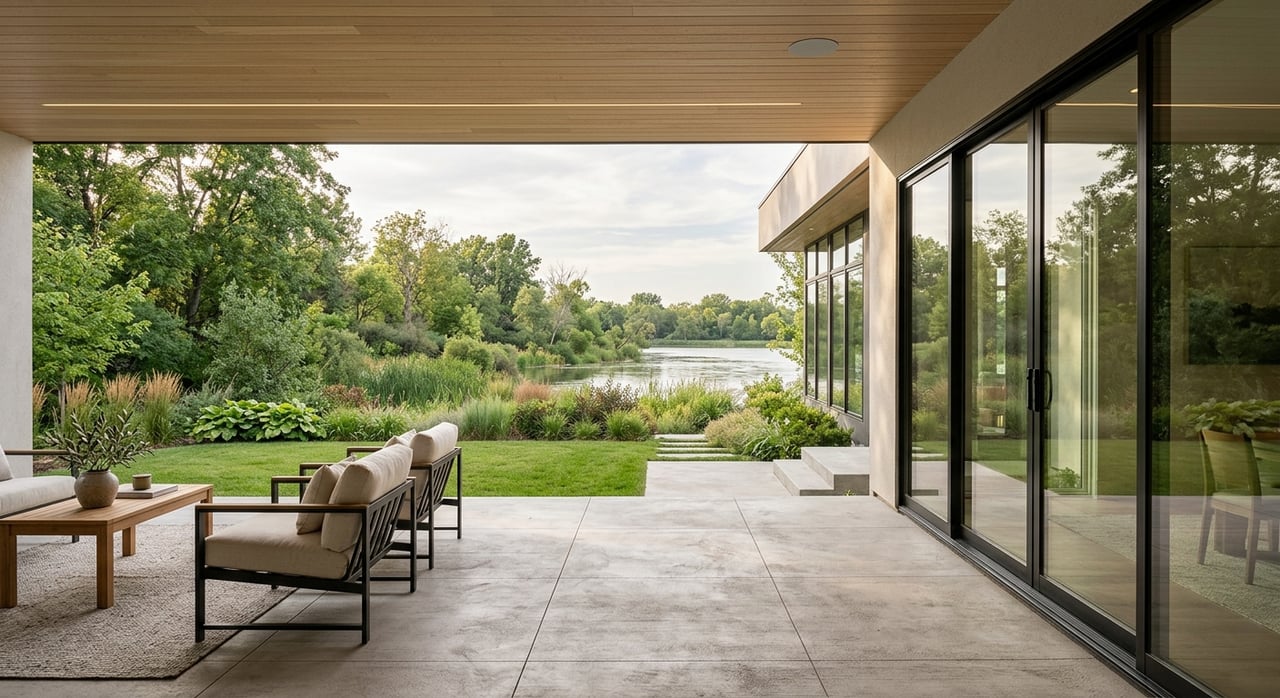
Start a walk on the Boise River Greenbelt from anywhere near Eagle Island State Park and the surface under your feet is smooth asphalt, worn just enough to hold last week's rain in shallow dark patches. Follow it east past the North Channel behind Lamb Weston on Rivershore Lane and somewhere along that stretch, without much warning, the pavement runs out. Gravel and packed dirt pick up where the asphalt stops. Most people who walk this route regularly know exactly where that seam is. Fewer know why it exists, and that reason says something real about how this section of the greenbelt actually gets maintained, which matters more than usual once fall traffic on the trail picks up.
As BoiseDev reported, the North Channel segment was closed to the public entirely from fall 2022 through most of 2023, the result of bank erosion that undercut the trail edge and construction on the nearby Eagle Road pedestrian bridge. When the city brought in a contractor to fix it, the repair came in at $243,000, a number the city says it saved roughly $400,000 against by partnering with a private landscaping firm rather than handling the work entirely in-house. But the fix only covered part of the trail. The rest stayed unpaved because the project was funded out of Eagle's capital maintenance program, a pool of money the city sets aside over time rather than draws all at once, and this particular stretch wasn't flagged as the most urgent use of it. The asphalt ends where the budget line did, not where the trail does.
That distinction matters for anyone who lives along this corridor and treats the greenbelt as a daily habit rather than a weekend outing. The paved side rides and rolls a stroller easily even after a wet October morning. The unpaved side gets soft and uneven in the same conditions, better suited to trail shoes than road bikes. Neither is better. They're just different trails wearing the same name, and fall is when that difference shows up most, because it's also when the wildlife and the foliage along both sides start pulling people out to look.
Two Wineries Turn the Ride Into a Reason to Stop
The greenbelt through South Eagle isn't purely a pass-through. Dude DeWalt Cellars and Buckhorn Vineyards both sit close enough to the trail corridor that a ride or a walk can end at a tasting room instead of just passing one. Late August brought a watercolor paint party to Buckhorn, the kind of low-key outdoor gathering that works well on a property with room to spread out, and Dude DeWalt hosted live country music on its patio in late September as the evenings started cooling into something more comfortable for sitting outside with a glass of wine than the peak of summer allowed. Neither winery treats the greenbelt as an afterthought. Both lean into being a stop along it.
That's a different kind of amenity than most greenbelt descriptions account for. It's easy to talk about the trail in terms of mileage and paving and call it done. What actually changes the way people use a 25-mile path is whether there's a reason to get off it partway through, and in this stretch of Eagle there are two, both walkable or bikeable from homes along the river corridor, both currently running fall programming rather than winding down for the season.
The Trail Leads Into Heritage Park in October
The clearest argument for treating the Eagle Greenbelt as a resident amenity rather than just a recreational corridor shows up twice this October, both times at Heritage Park in downtown Eagle, both reachable from the South Eagle stretch of trail without needing a car.
Eagle's Harvest Fest lands on October 10, and this year it comes with something the city doesn't get to offer every fall: a visit from Idaho's Liberty Bell replica, on tour through the state as part of the America250 Ambassadors program before it's reinstalled at the state capitol. The bell arrived in Idaho originally in 1950 as part of a U.S. Treasury savings bonds campaign, cast by the Paccard Foundry in France to match the dimensions of the original in Philadelphia. Harvest Fest itself runs the usual fall lineup around that, pumpkin decorating, blacksmith demonstrations, live fiddle music, food vendors, and a giveaway of 1,500 pumpkins for kids, distributed until they're gone.
Two weeks later, on October 24, Night of a Thousand Pumpkins turns Eagle City Hall into trunk-or-treat territory, with a chili cook-off, a DJ, and roughly a thousand carved jack-o-lanterns lighting the grounds. Pumpkin carving for the display starts on October 19, five days ahead of the event, which means the buildup is visible around City Hall for the better part of a week before the night itself.
Both events sit within easy reach of the greenbelt's South Eagle stretch, and both plug into something that's been running at Heritage Park since 2002: the Eagle Saturday Market, a handmade goods market that predates most of the newer development along the river and still operates out of the same park most weekends. A resident who bikes the trail on a Saturday morning already has a reason to end the ride at Heritage Park. October just adds two more.
What the Season Actually Adds Up To
None of this changes the greenbelt's basic shape. It's still the same 25-mile corridor, still anchored on one end by Eagle Island State Park, still running through the same mix of paved and unpaved sections that reflect years of incremental repair rather than one continuous build. What changes in fall is how much reason there is to actually use it beyond exercise. The wineries along the corridor are running their patio season into cooler weather instead of closing it out. Heritage Park is hosting the two biggest civic gatherings of the year within two weeks of each other. And the trail itself, cottonwoods turning along both channels, carries residents directly between the two without requiring them to get in a car.
The unpaved section behind Lamb Weston will likely stay that way for a while. Eagle's capital maintenance program moves in phases, and there's no indication this particular stretch has moved up the list. For now, knowing which side of the river you're on still tells you more about your walk than the mileage marker does.
If you live along this stretch of Eagle and you're thinking about what a home here is actually worth, not just as square footage but as daily access to a trail, two wineries, and a park that hosts the city's biggest fall gatherings, that's the kind of context Heather Ferguson Realty Group builds into every conversation about buying or selling in South Eagle.